Veresk
Clinic Booking & Patient App
Overview
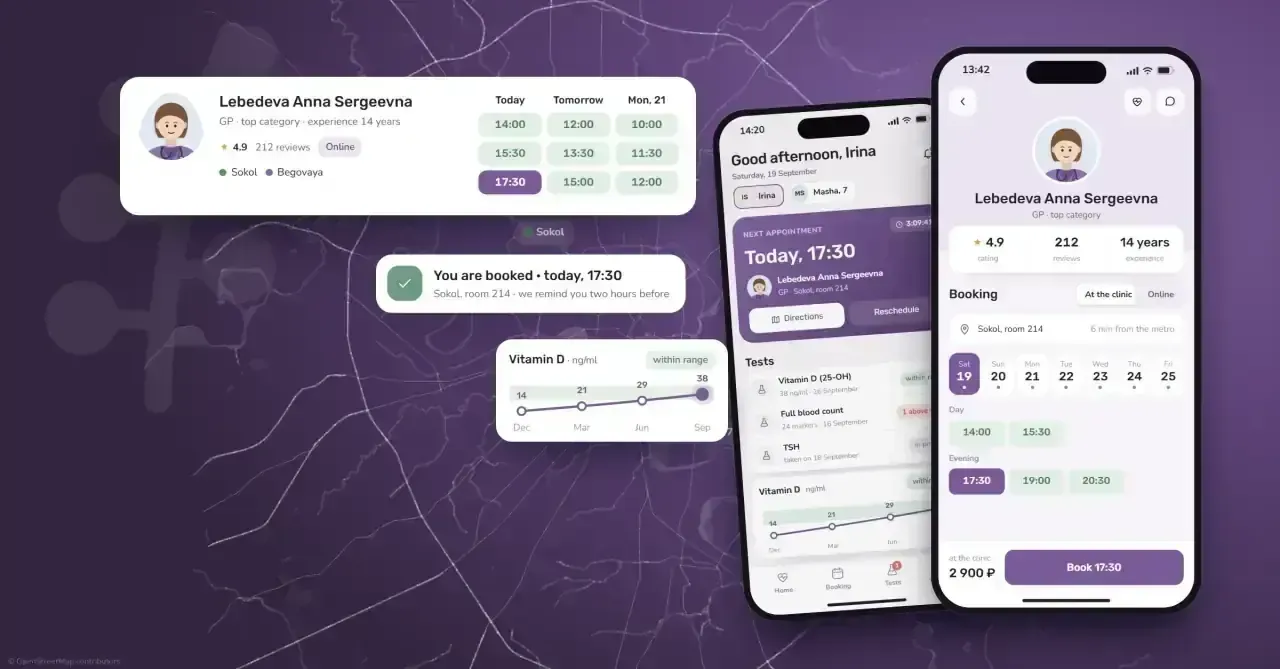
A concept for a network of six family clinics. The most stressful part of seeing a doctor is getting to one — calls, waiting lines, “no free slots”. Here the free time is visible right in search results, booking takes a tap and three short steps, and test results arrive in an account with plain-language notes and the doctor’s comment. The clinics, doctors, patients and prices are fictional.
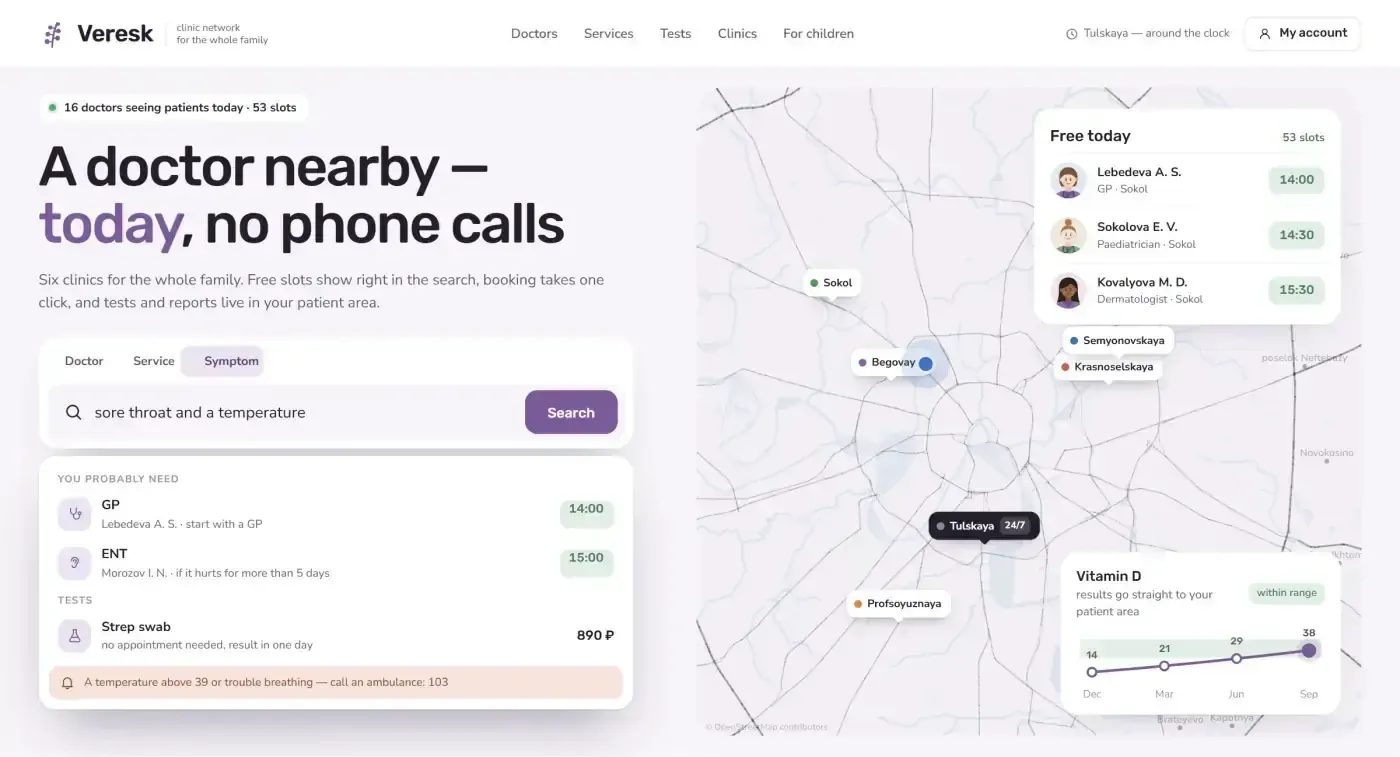
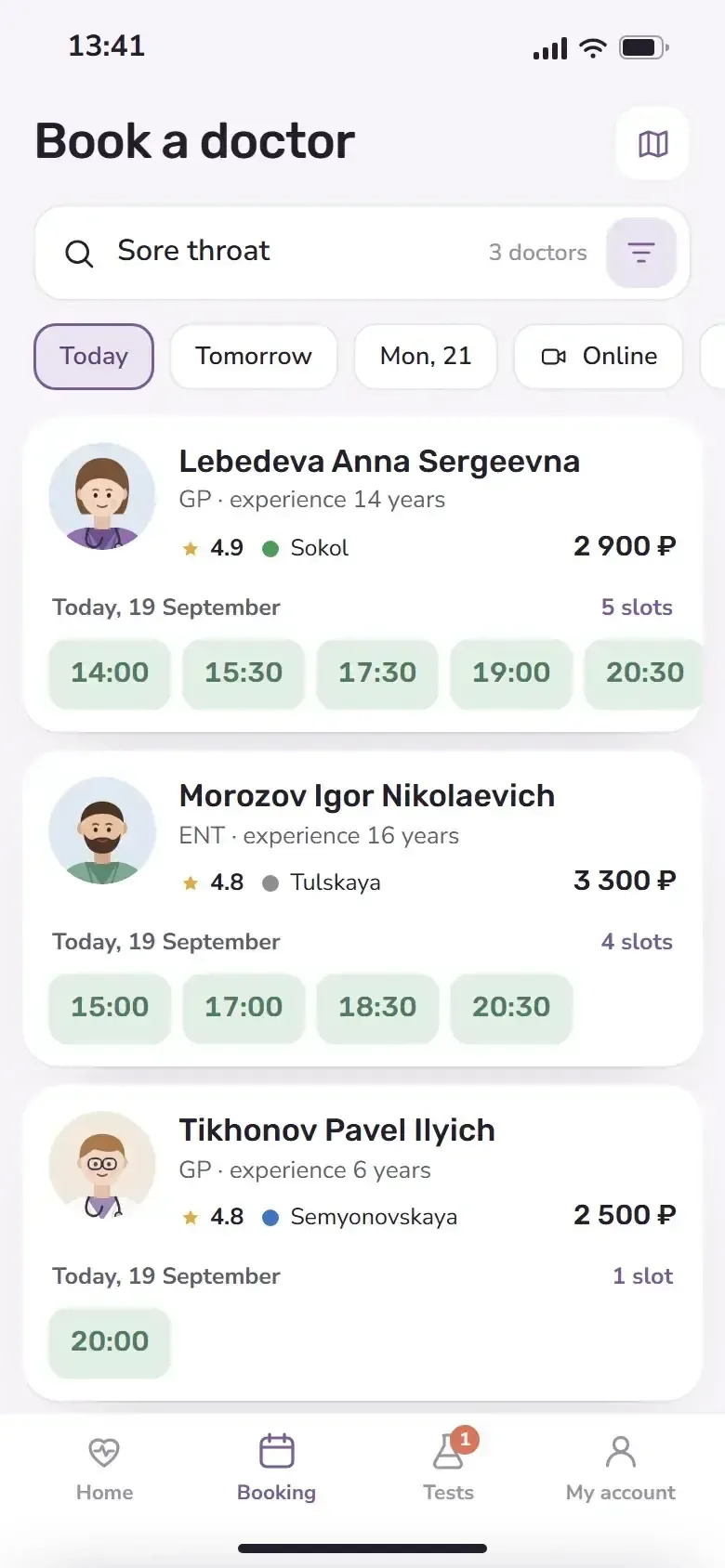
People rarely know which doctor they need — they know what hurts. So search understands a symptom too: “sore throat” turns into a GP and an ENT with their nearest times, the tests worth taking, and a calm line about when to call an ambulance instead.
01
Time right in the results
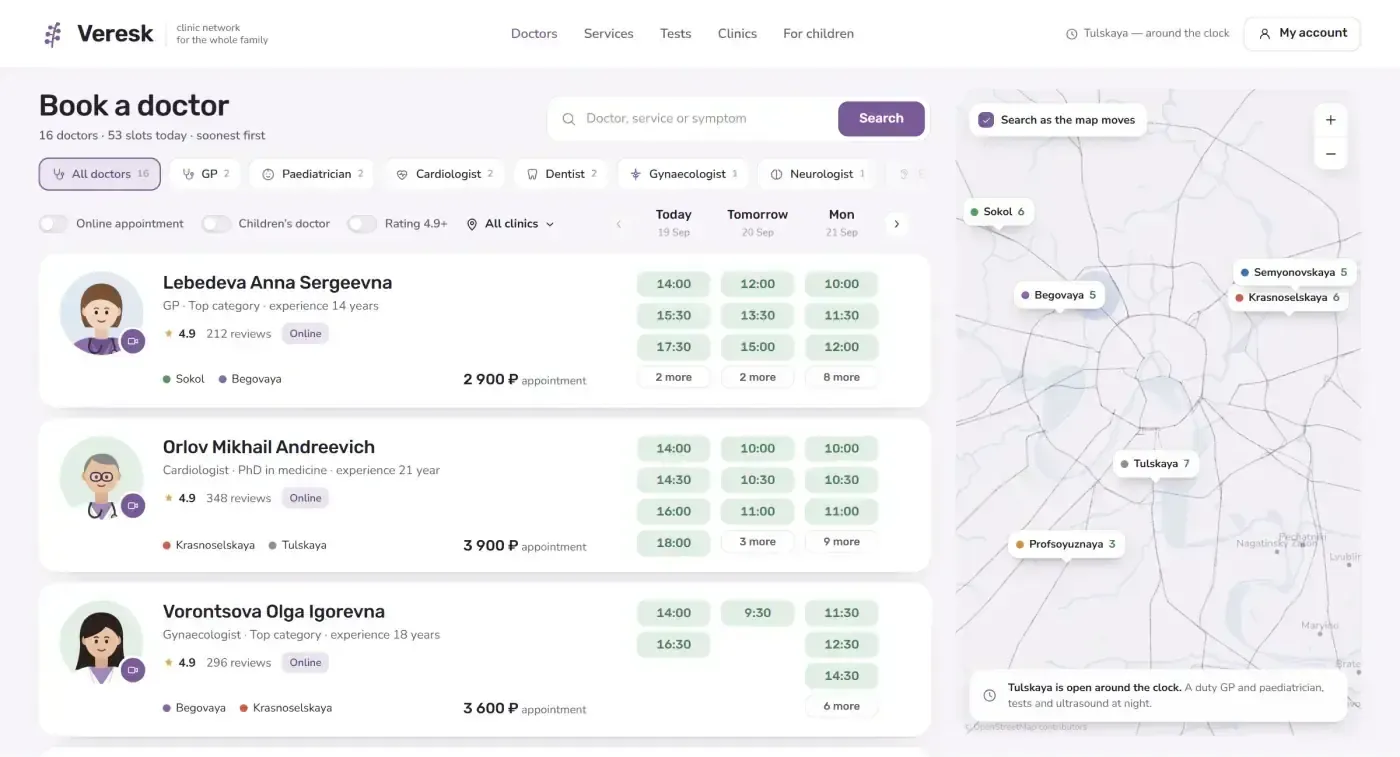
Like the big booking services, each doctor card carries three days of free slots — arrows shift the days for everyone at once. A tap on a time opens a short booking card without leaving the list; hovering a doctor lights up their clinics on the map with the travel time.
02
Booking always in view
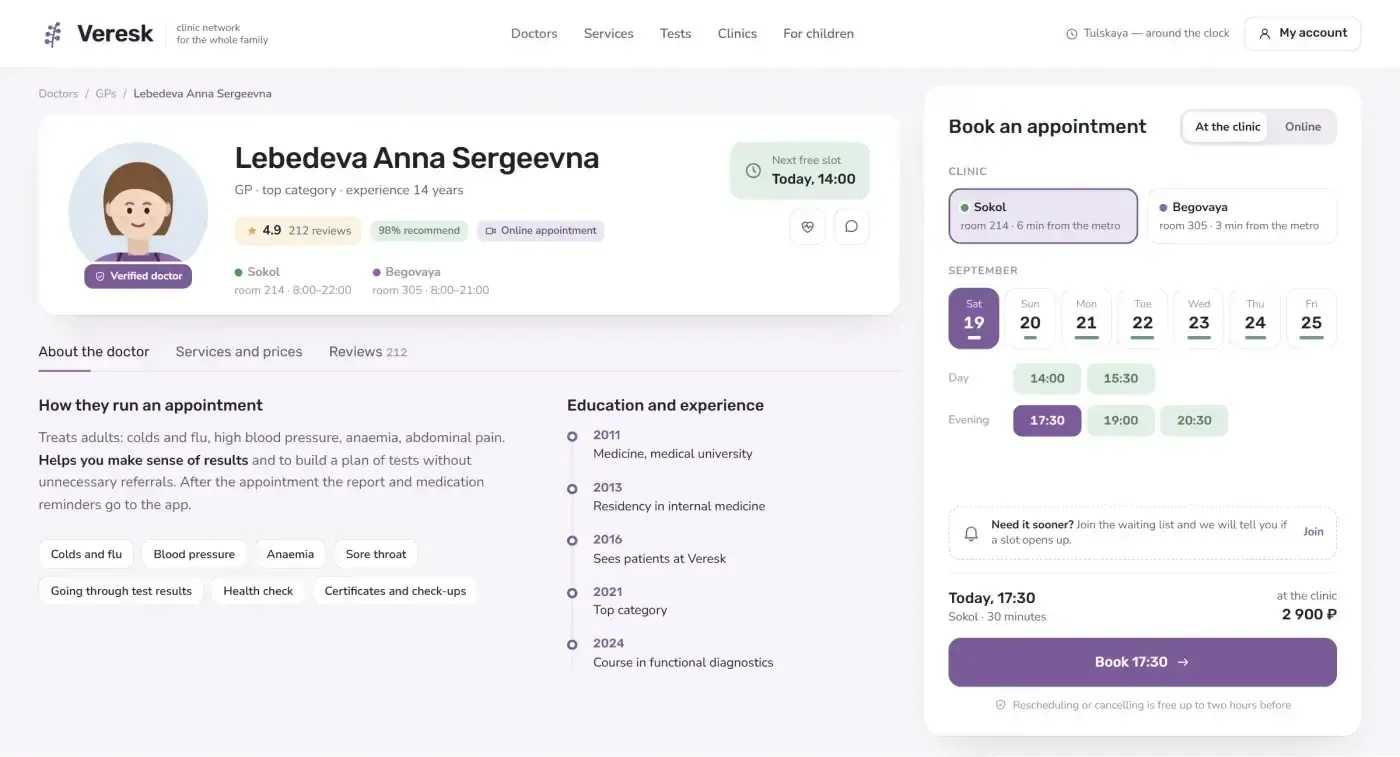
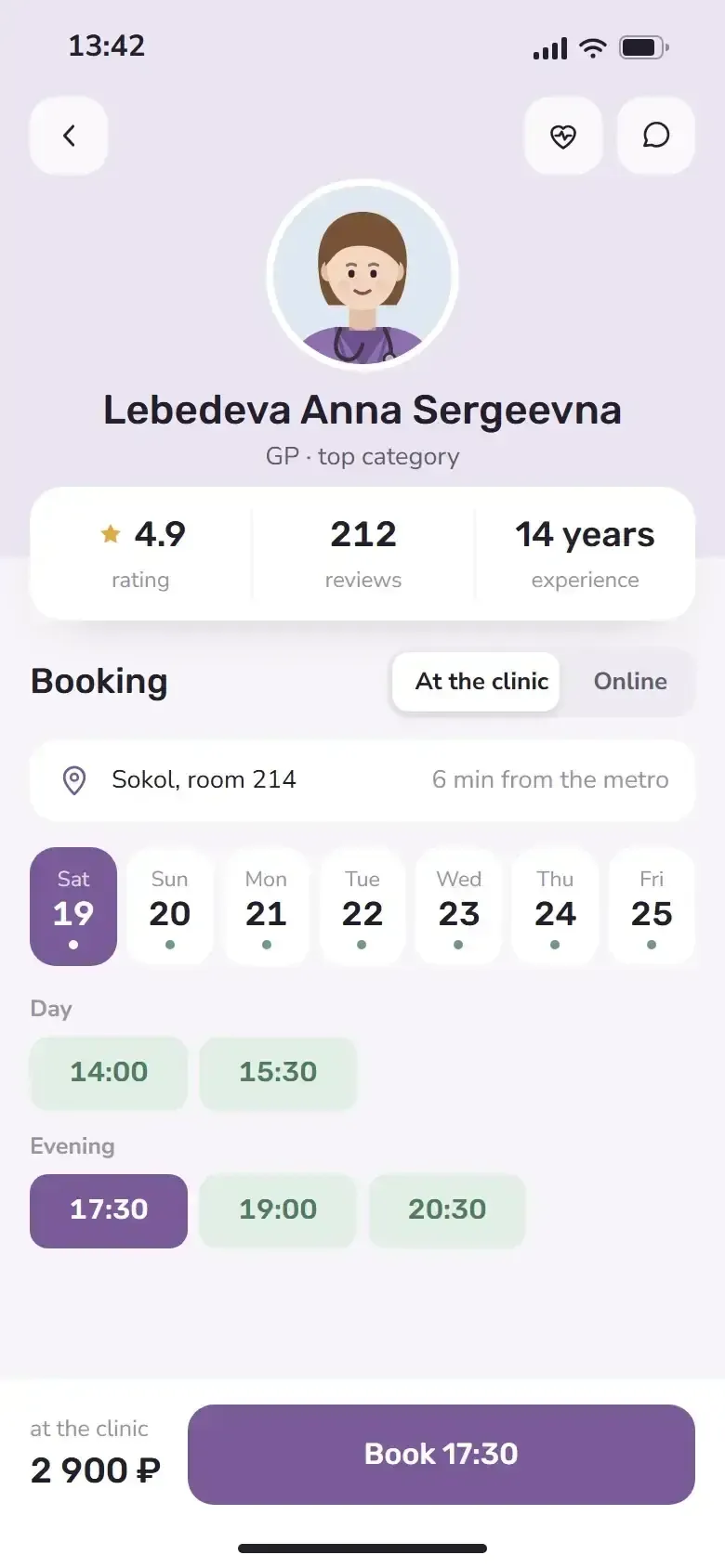
The doctor’s page reads left to right: who they are and what patients say after an actual visit — then the booking panel: clinic or video call, a week with free days marked, times grouped by morning, day and evening. The button names the time you picked.
03
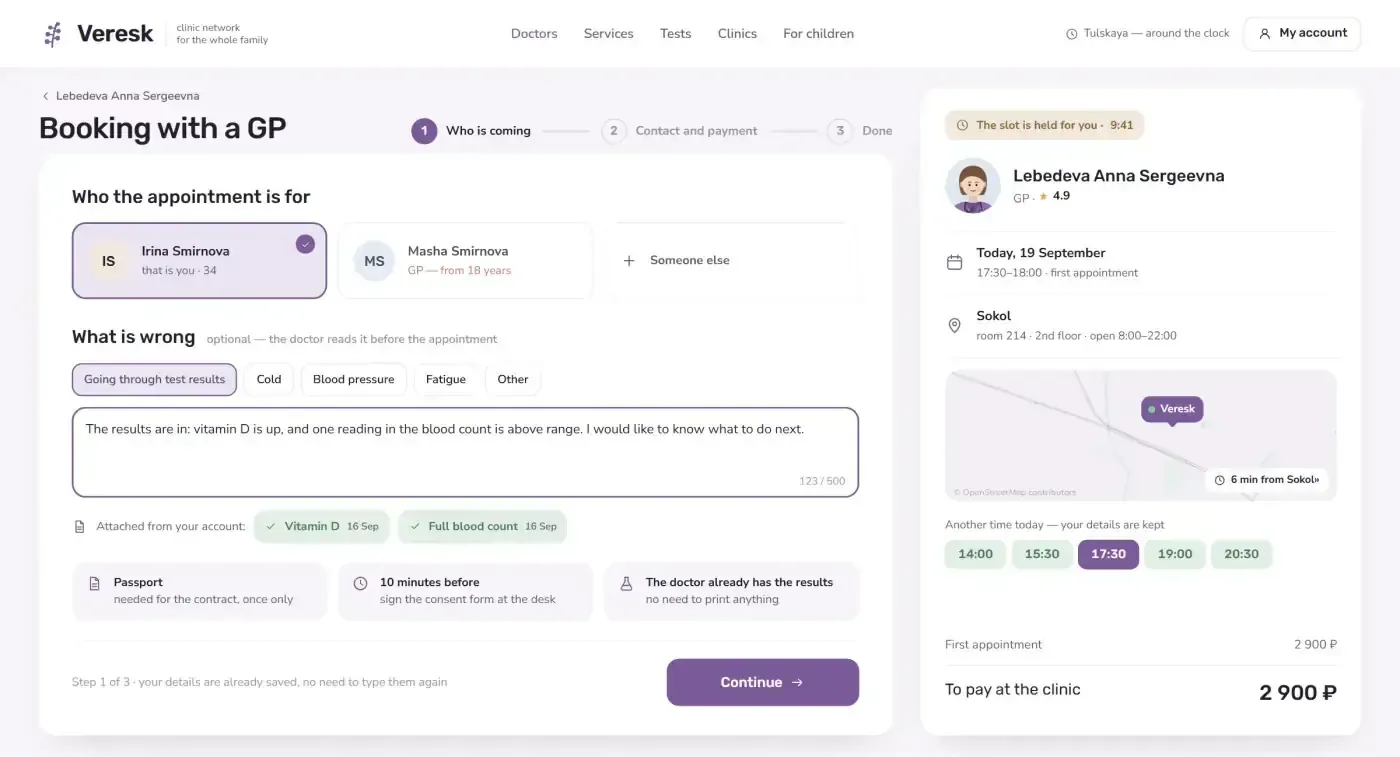
Three steps, slot on hold
While you fill in the form, the slot is held for you — the timer is honest about how long. Everything the clinic already knows is filled in: the patient, the phone, fresh test results the doctor will see before the visit. At the end — a ticket with a code for the front desk.
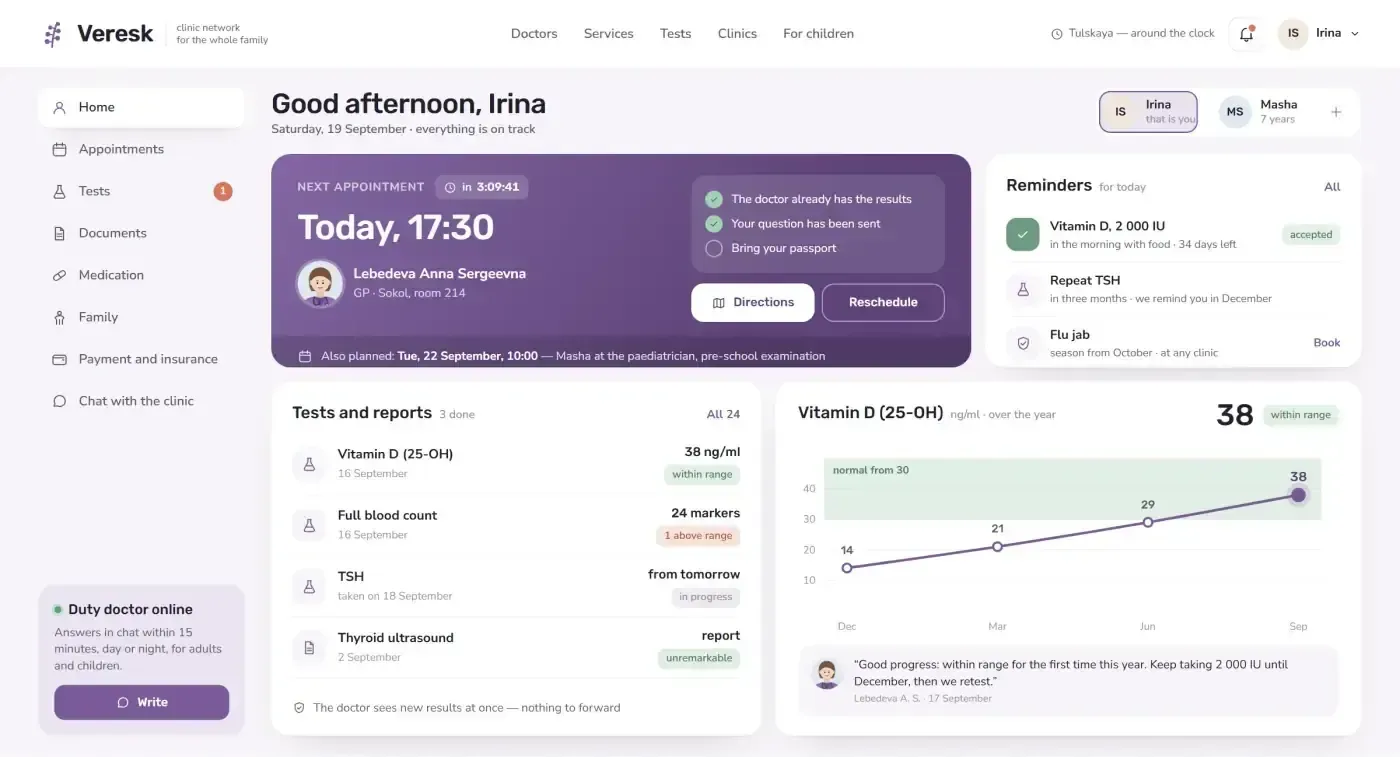
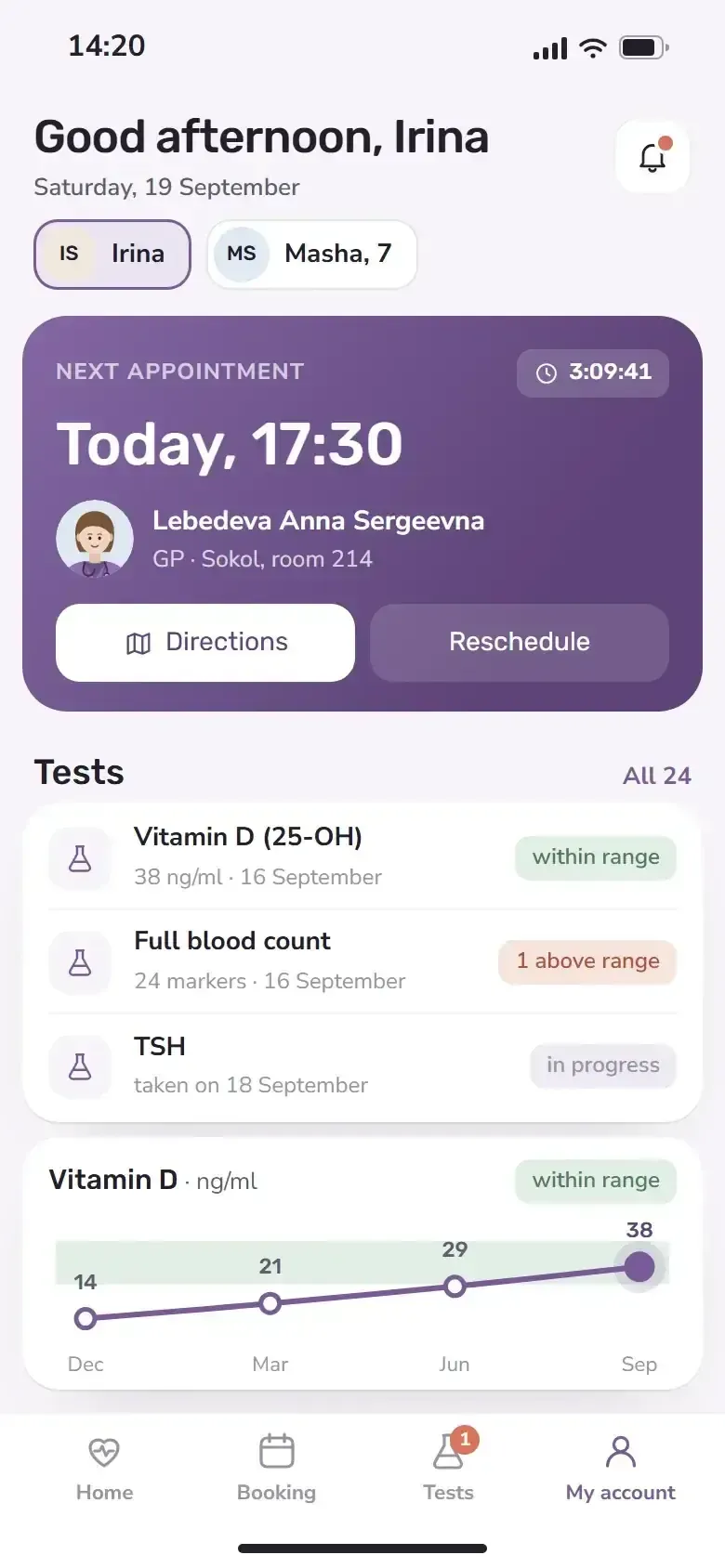
A family shares one account: a switch at the top swaps visits, tests and charts between the parent and the child. Results come with plain labels — “in range”, “one value above range” — and a trend chart with the normal range shaded, so a number stops being scary.
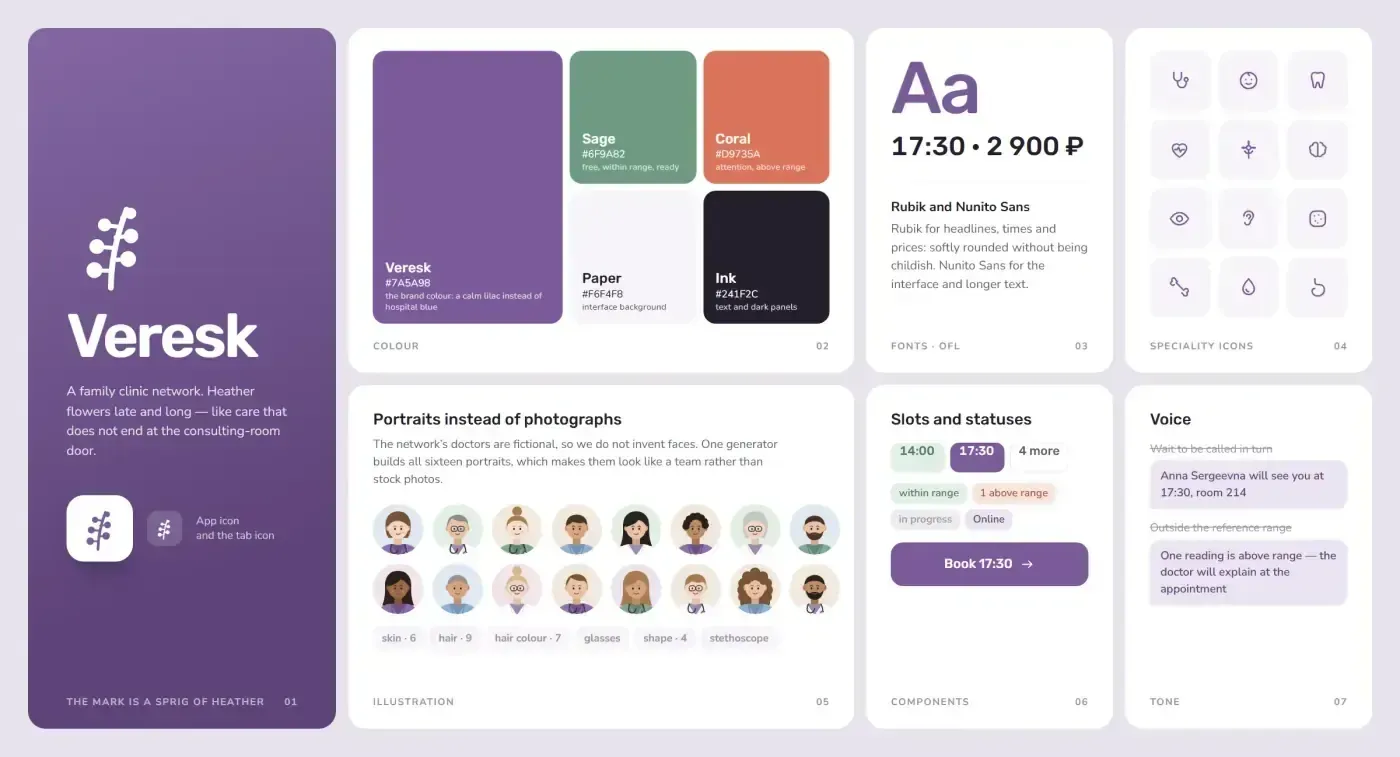
EntryUI concept; the clinics, doctors, patients, reviews and prices are fictional, clinics are named after metro stations without addresses. Doctor portraits are drawn by one illustration builder made for this case. The map uses OpenStreetMap data (© OpenStreetMap contributors, ODbL). Fonts: Rubik and Nunito Sans, SIL Open Font License.
Next project
Rigel