Obzhig
Online Store & Identity
Overview
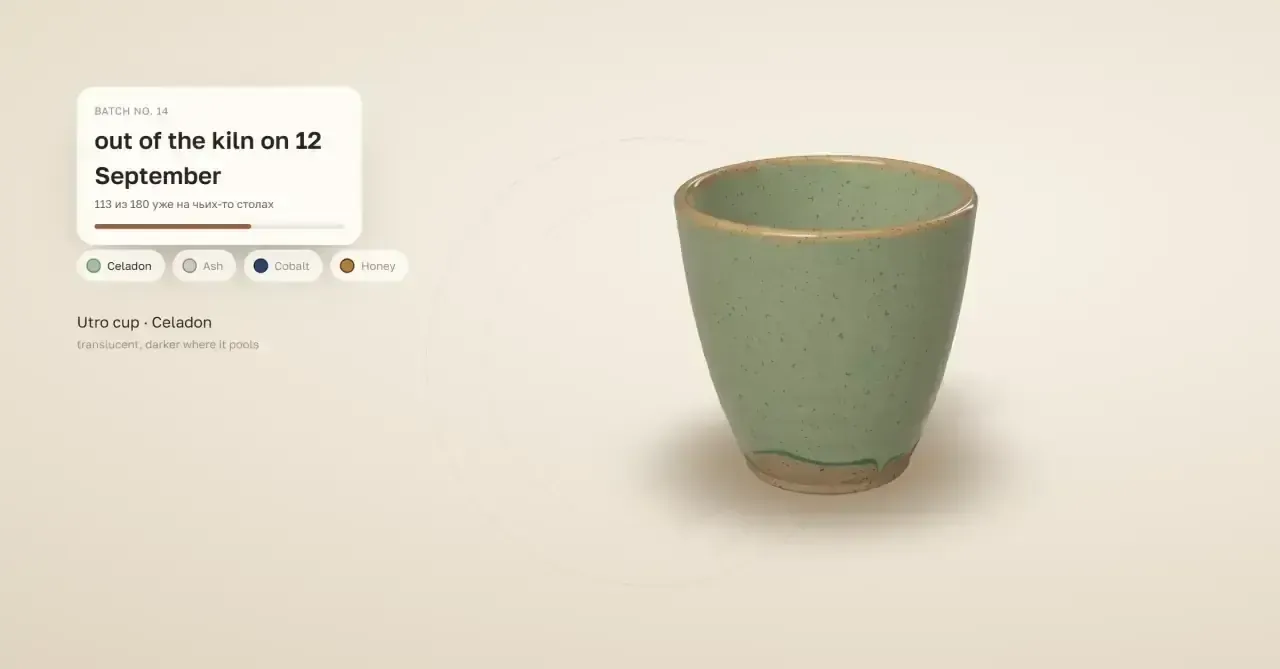
A concept for a small pottery workshop that sells online: hand-thrown stoneware in seven glazes, fired in batches of about two hundred pieces. Ceramics can’t be touched through a screen, so every piece here is a 3D model — the catalogue photos, the table scenes and the cup you can spin, flip over to see the maker’s stamp, and pour tea into. The workshop, its pieces and prices are fictional.
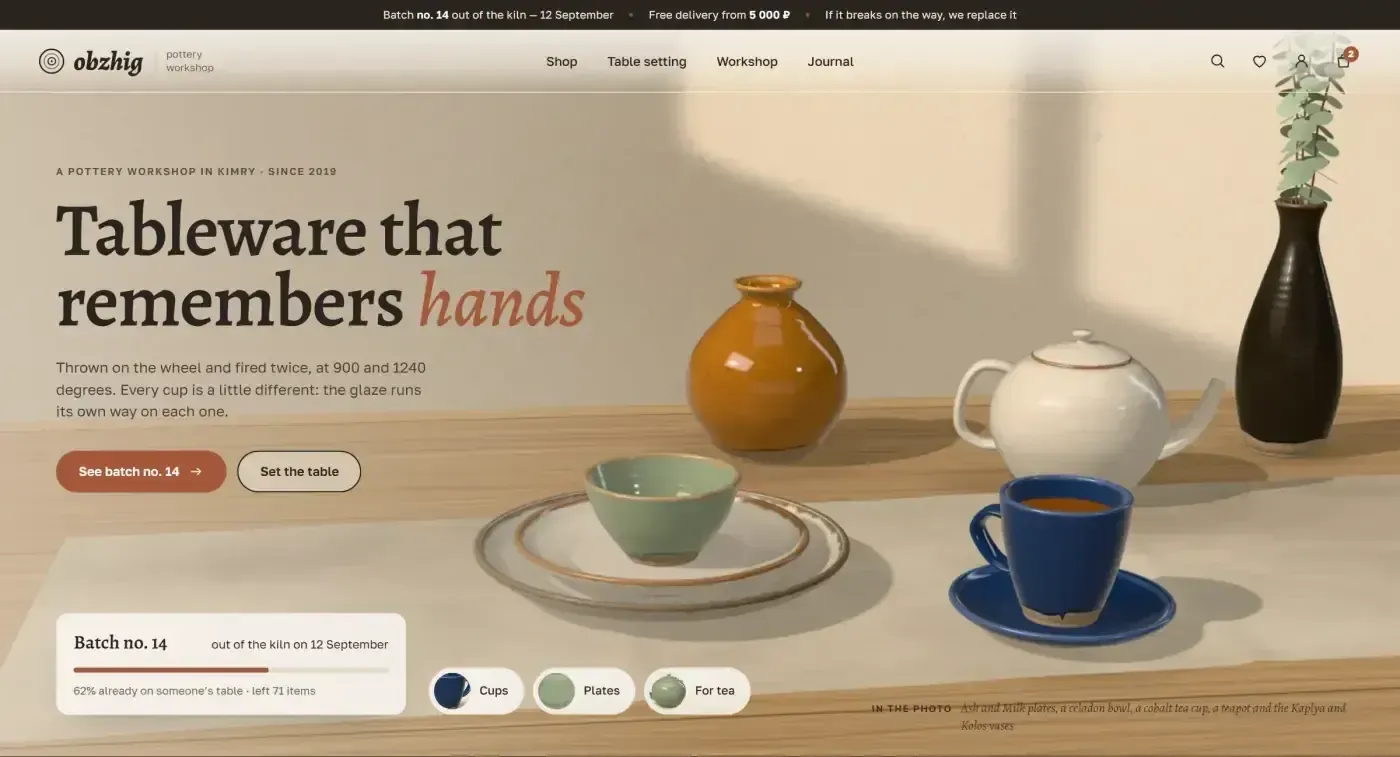
A workshop site should feel like the workshop: a table by the window, morning light, tea in a cobalt cup. Everything in the picture can be bought — and the batch counter shows how much of it is already gone.
01
Instant filters
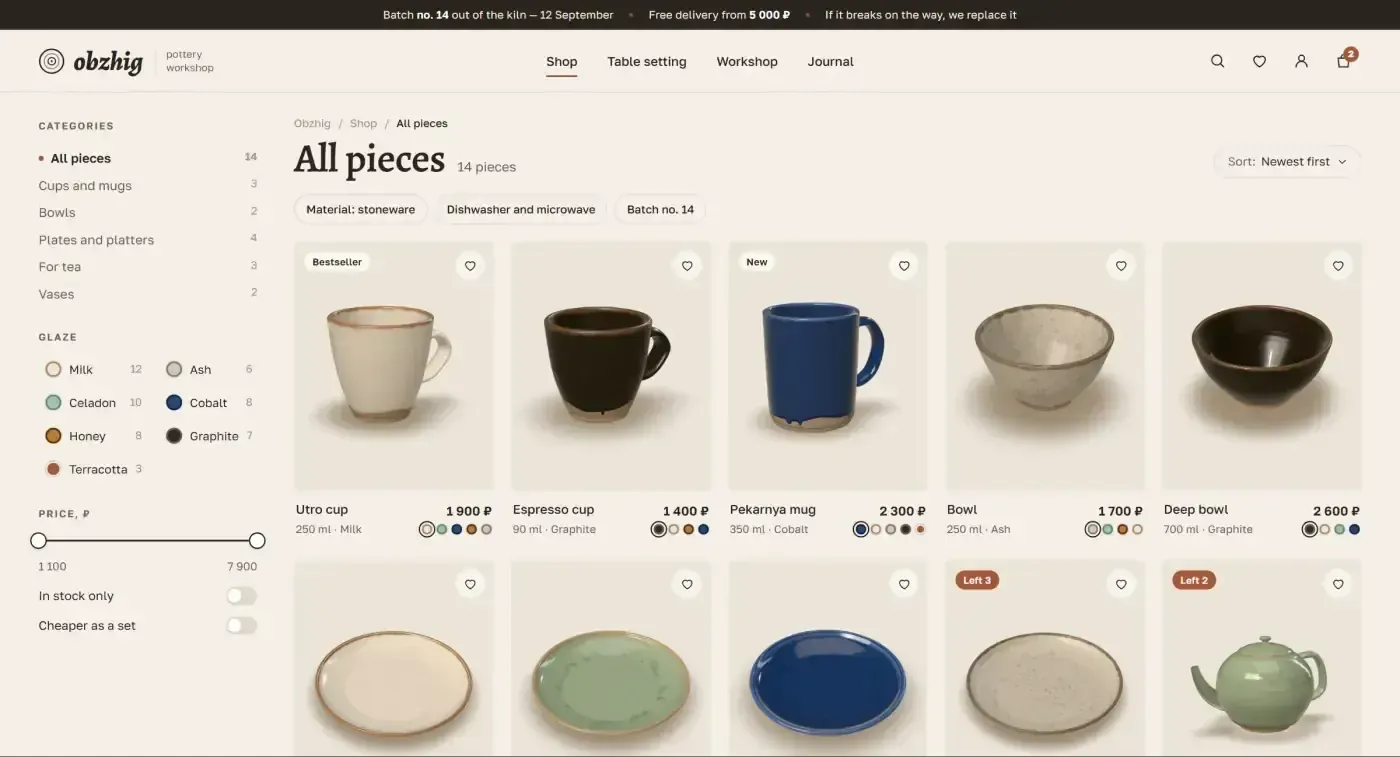
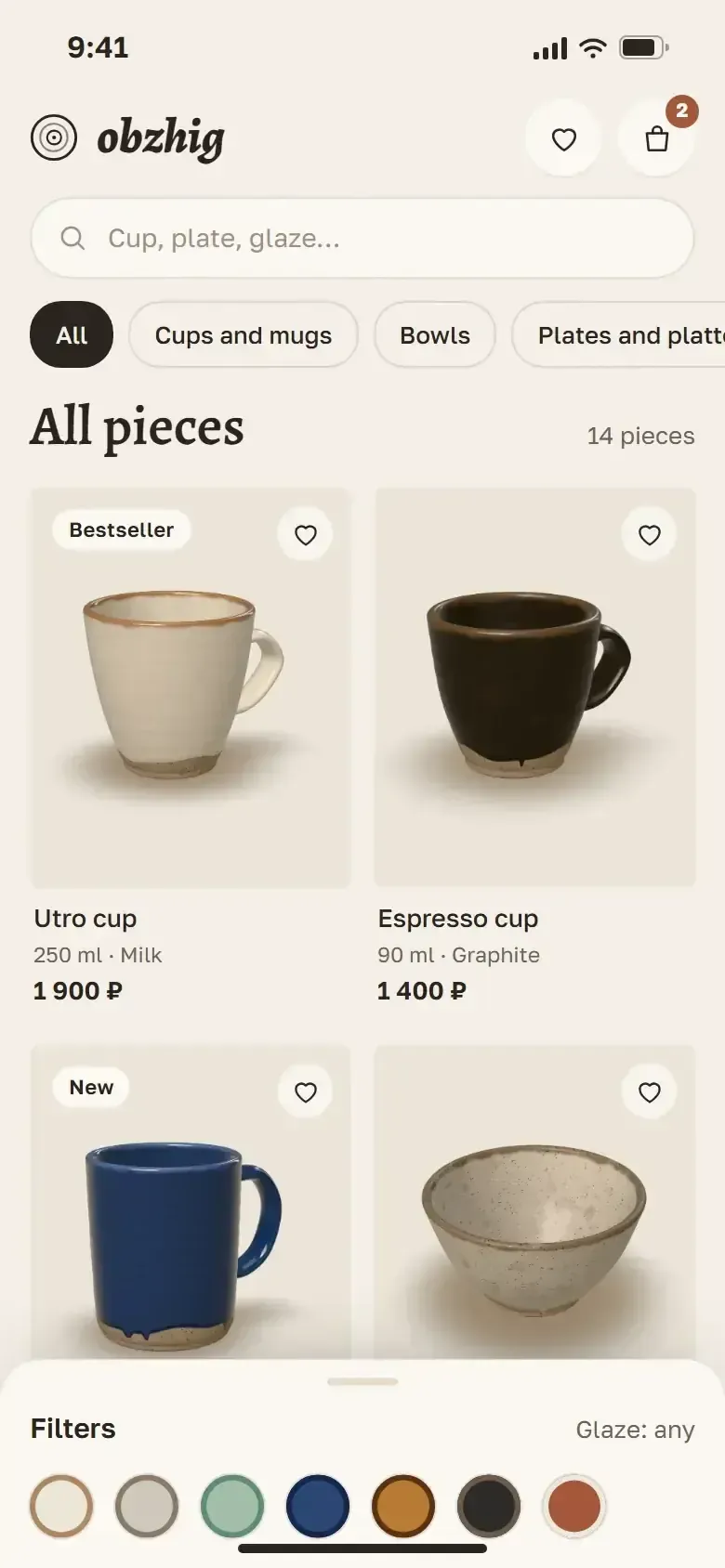
The catalogue works like the big sportswear stores: filters apply at once and the grid rearranges in place. Pick a glaze and every tile shows its piece in that glaze; out of stock — “next firing”.
02
A cup you can pour into
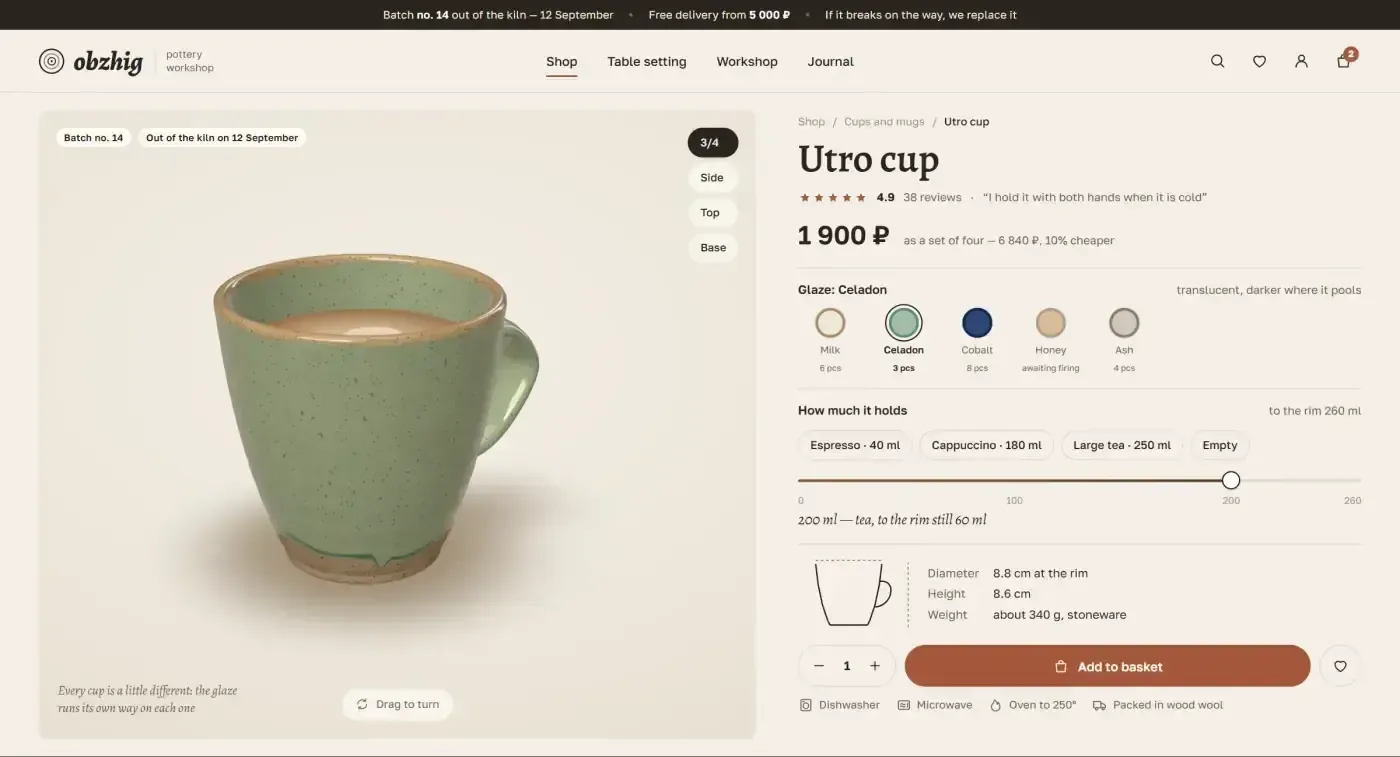
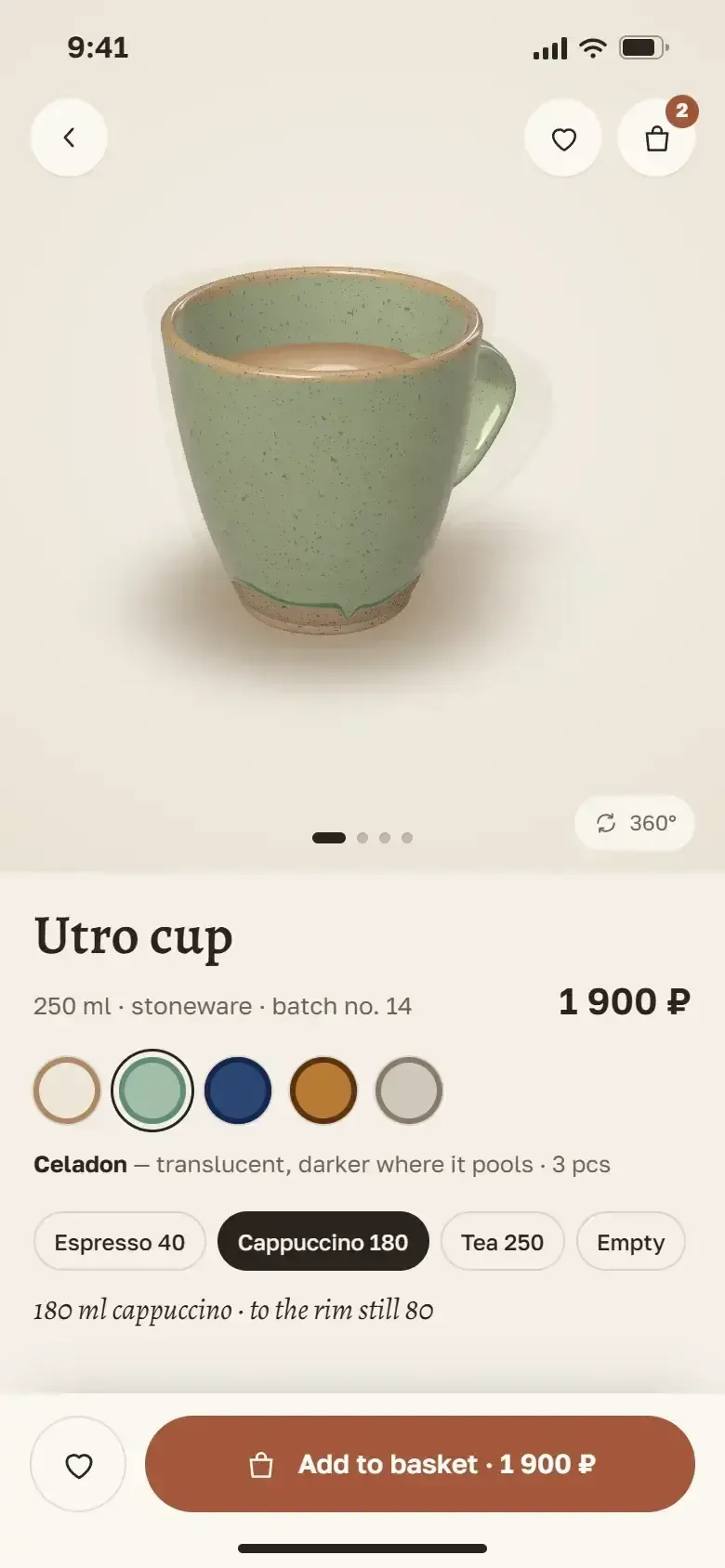
The product page answers what a photo can’t: spin the cup, look inside, flip it over to see the unglazed foot and stamp. The slider pours espresso, cappuccino or tea — the volume comes from the model itself.
03
Buy from the table
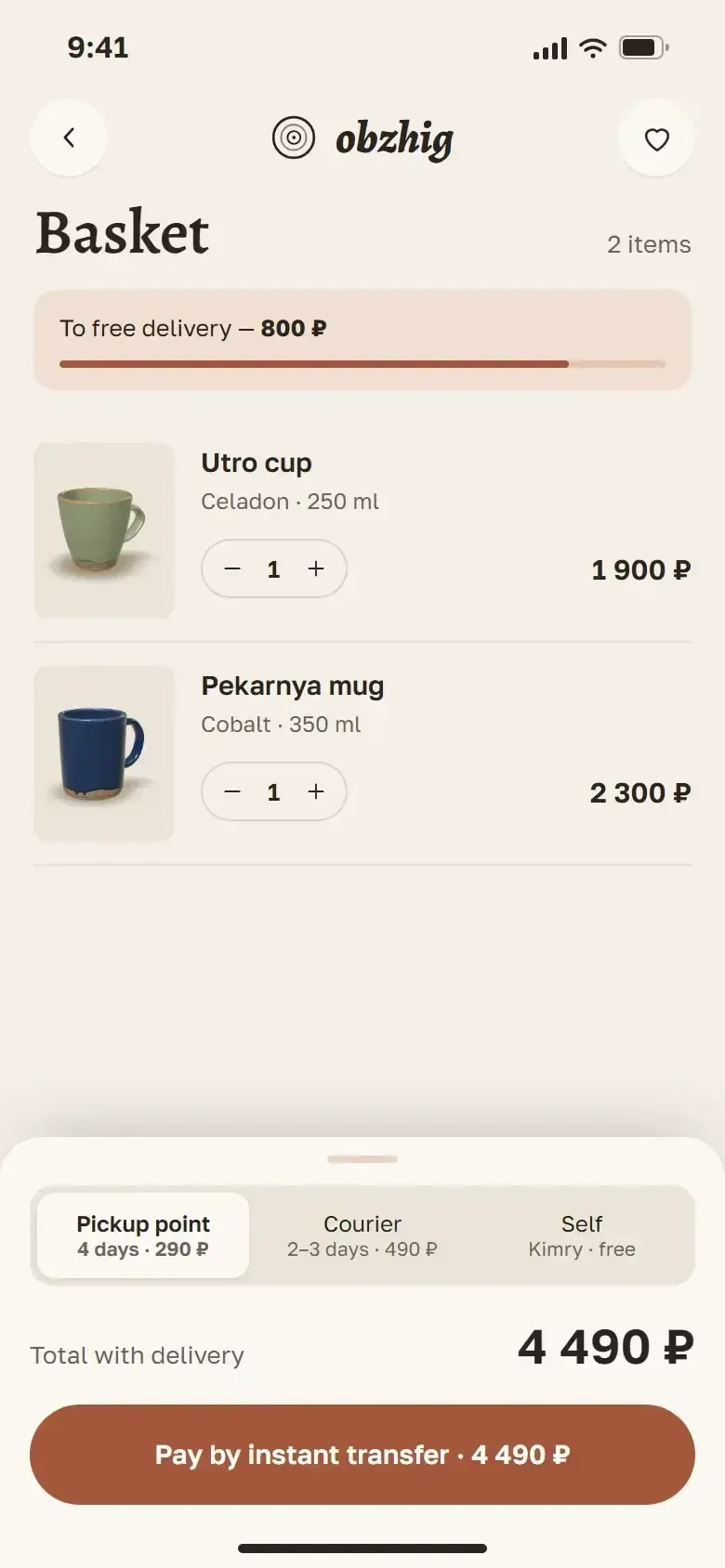
Like furniture catalogues, the table setting is a shop: every piece has a dot, the dot opens a card with a price, and the whole table goes to the cart in one click — ten percent cheaper as a set.
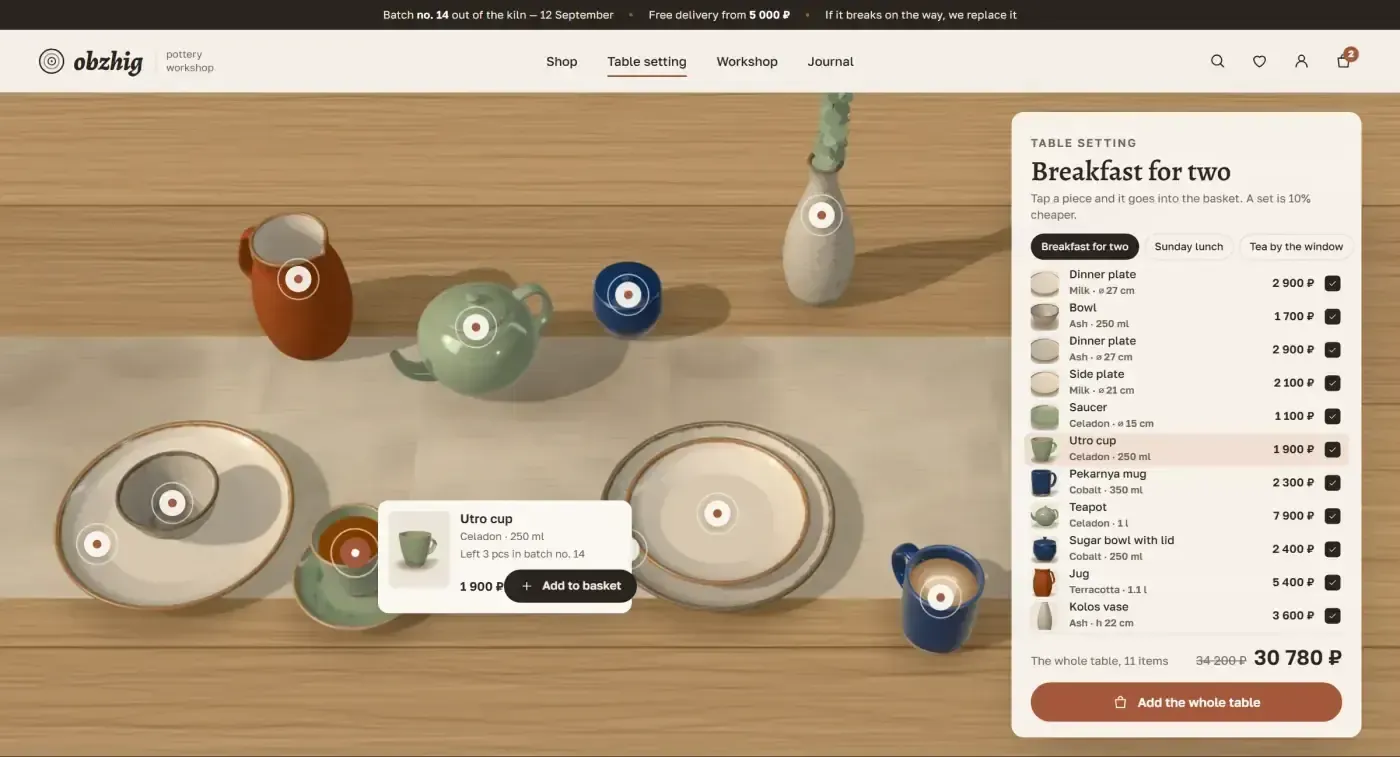
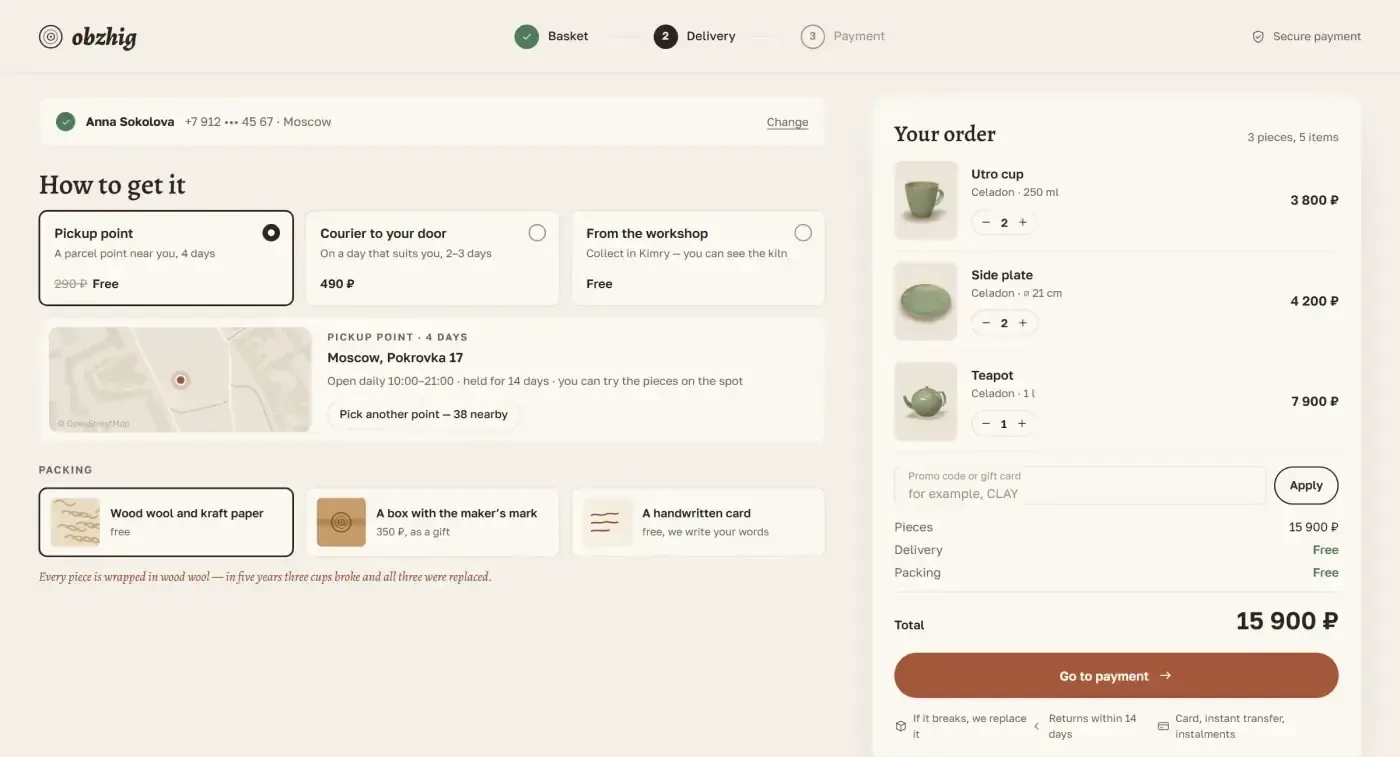
There is no stock photography here. Every cup is turned from a profile, glazed by a shader — runs, a raw foot, iron specks — and photographed in a virtual studio. The same models tell the workshop’s story.
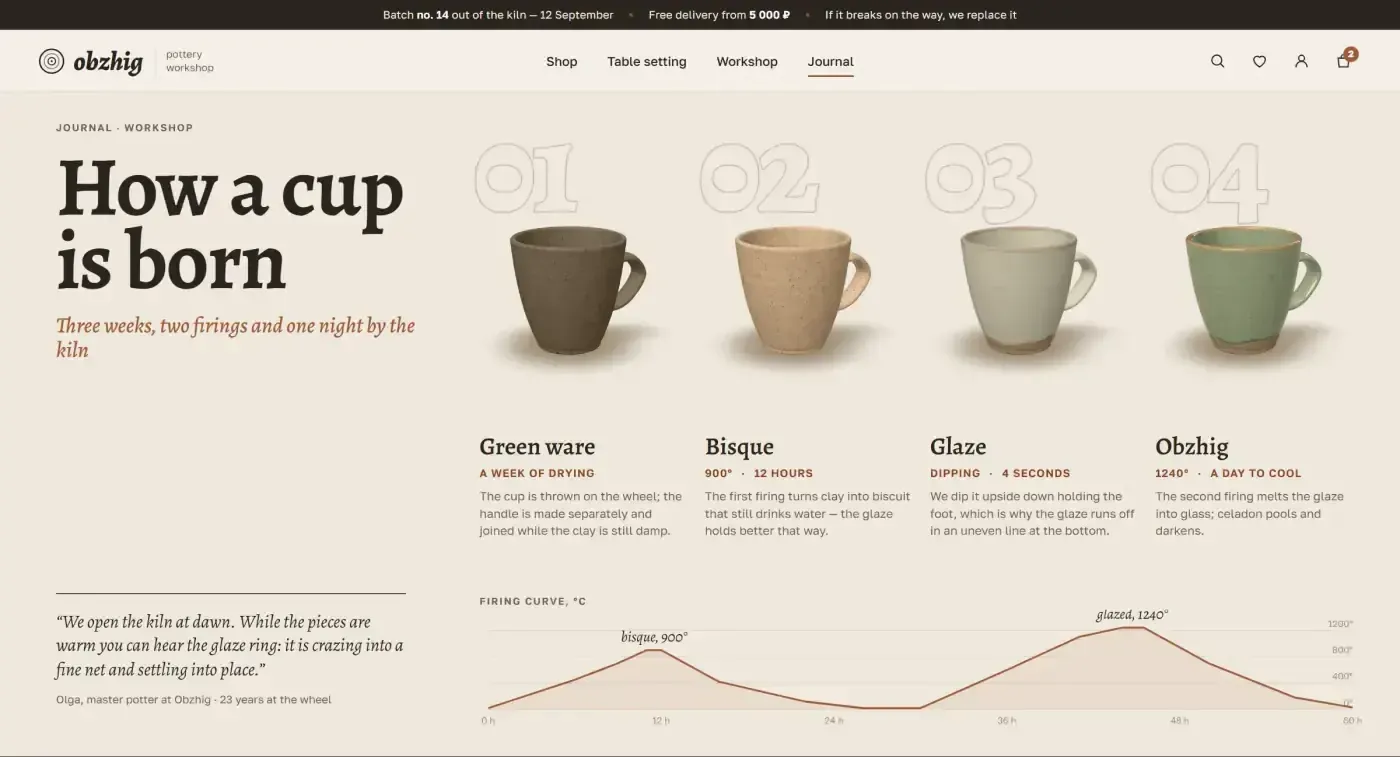
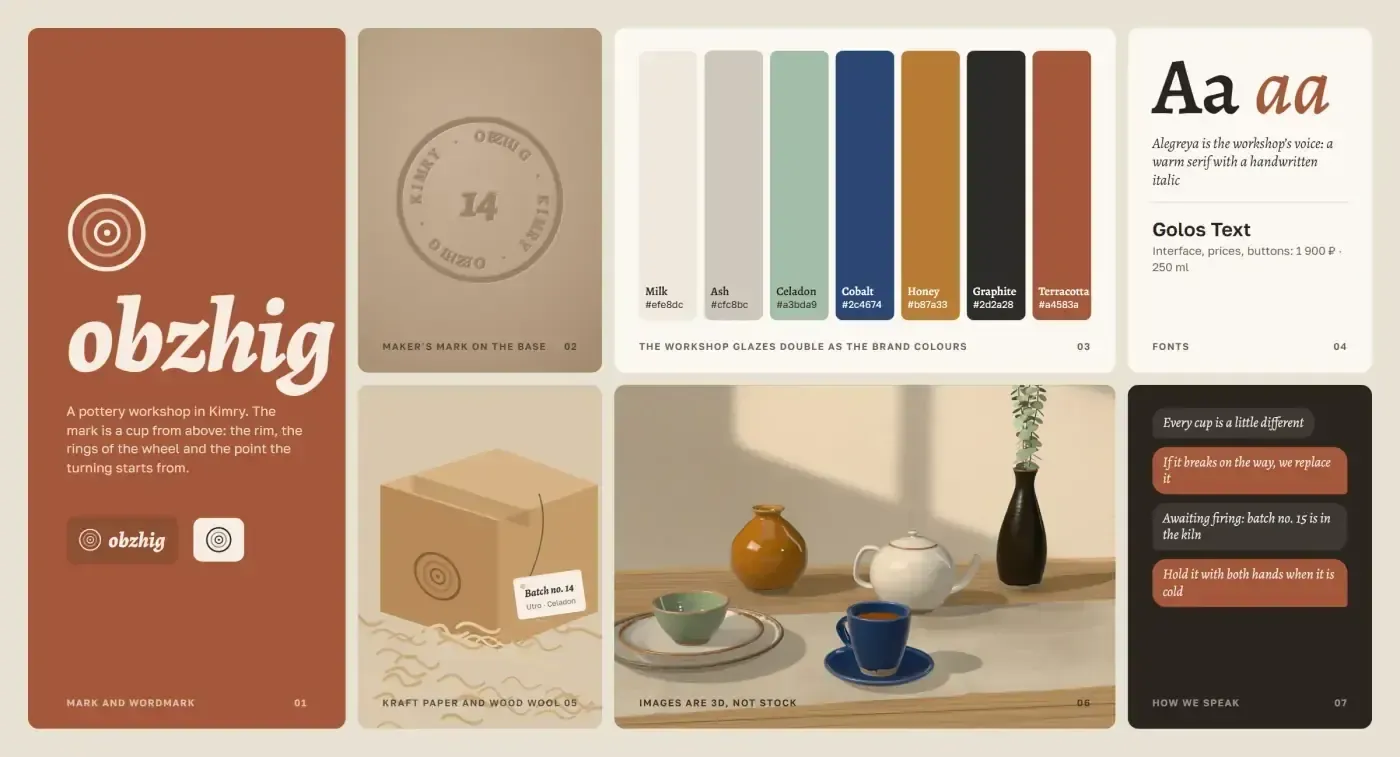
EntryUI concept; the workshop, its pieces, prices, people and reviews are fictional. All product photos and scenes are 3D renders made for this case; the pickup point map uses OpenStreetMap data (© OpenStreetMap contributors, ODbL). Fonts: Alegreya and Golos Text, SIL Open Font License.
Next project
Veresk